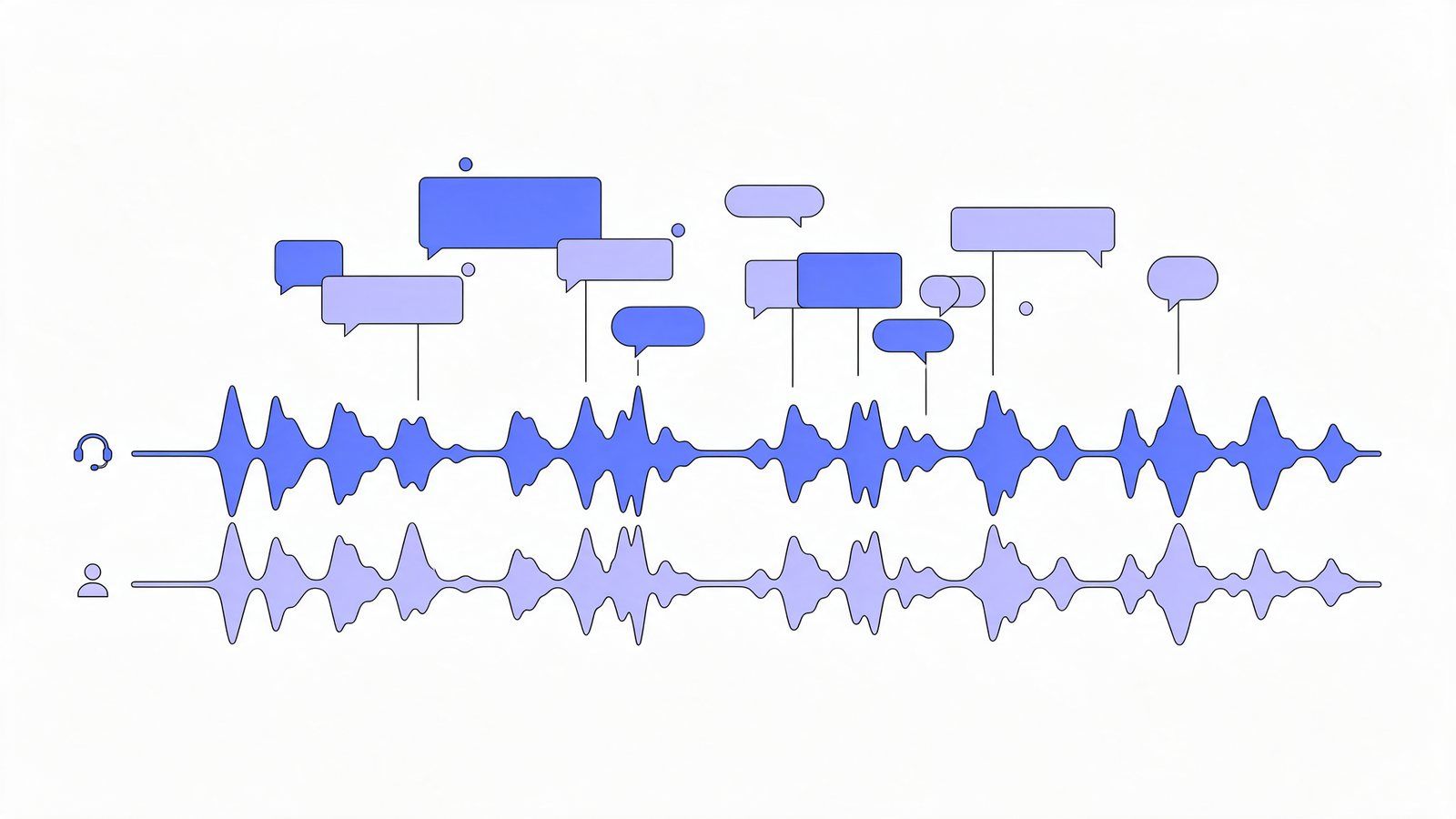
Speaker diarization: who said what in a customer call
Speaker diarization is the automatic splitting of a recording into segments and assigning each one to a specific person. It answers the question "who spoke when."

Speaker diarization is the automatic splitting of a recording into segments and assigning each one to a specific person. It answers the question "who spoke when."
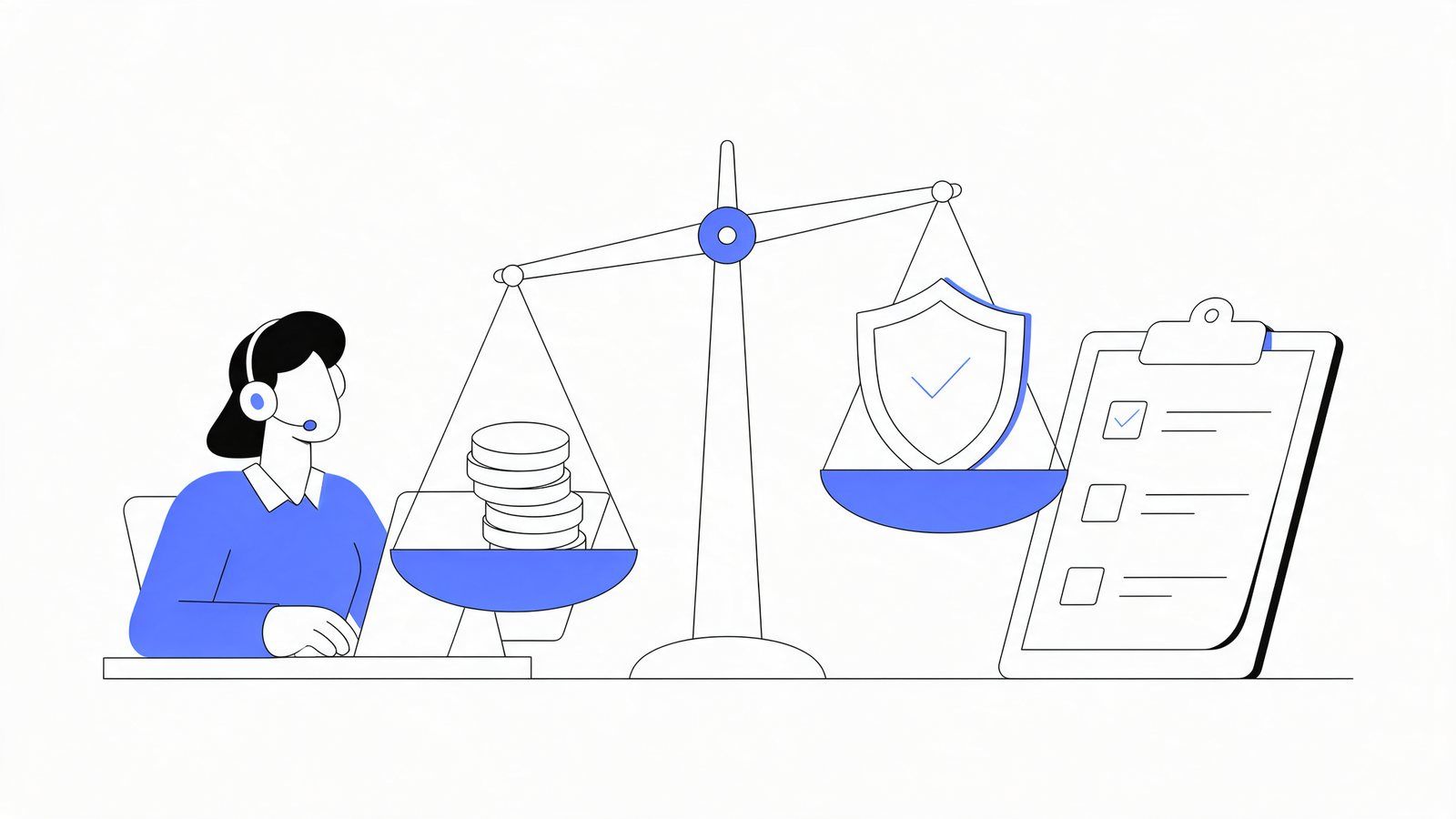
In debt collection, call analysis answers two questions at once: was the call effective, and was it lawful? Only full-volume monitoring, not a sample, gives you a reliable answer.
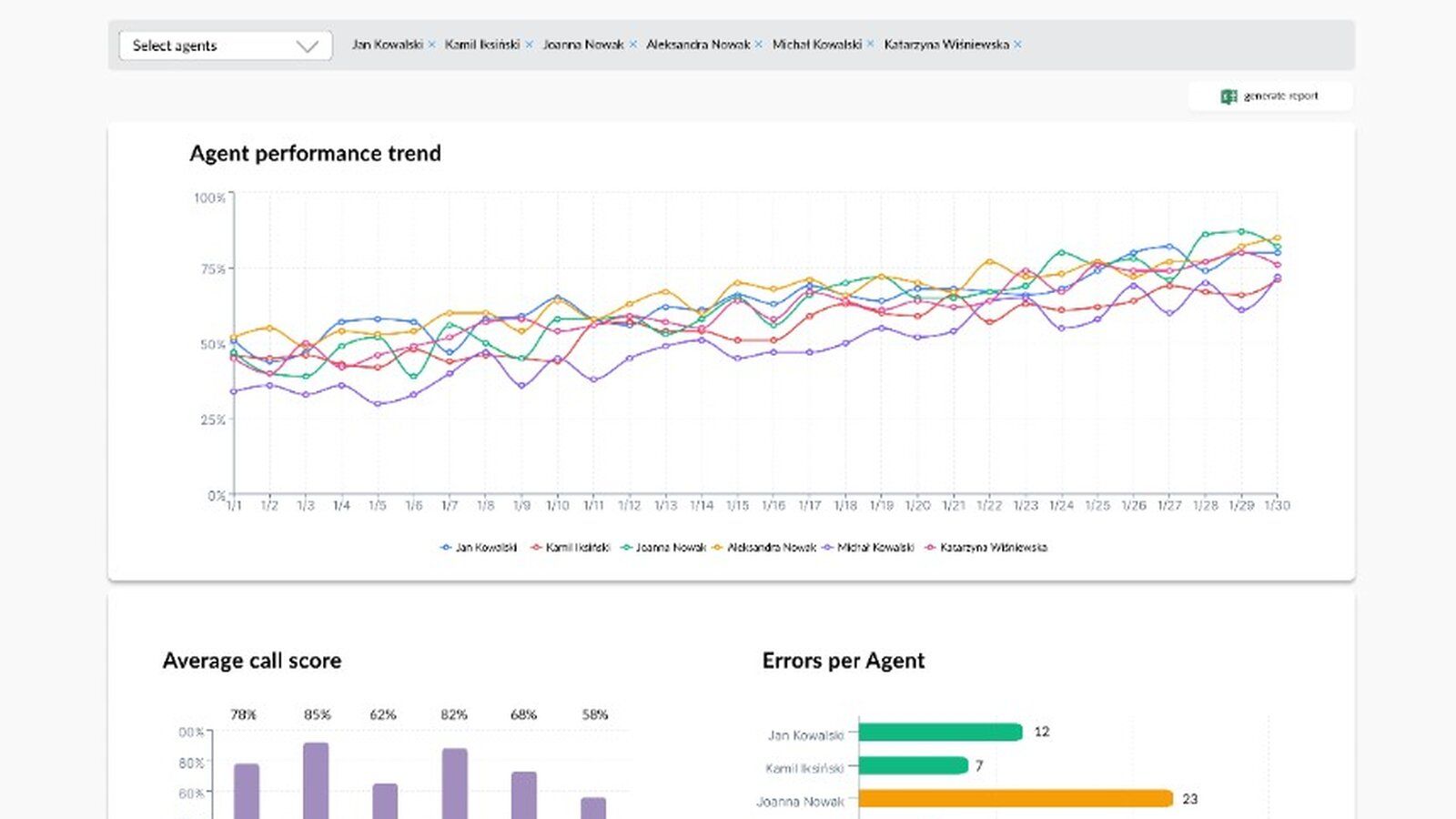
Before you cut agents' handle time, check how much of each call is spent waiting and what causes it. Three layers of data and the path from report to decision.
A "this call may be recorded" message isn't enough. Legal basis, customer notice, retention, copies of recordings on request, and what to check before analyzing calls with AI.
First Contact Resolution is one of the most misinterpreted call center KPIs. Five mistakes that make FCR say the wrong thing.
AI-powered QA that scores 100% of calls isn't just "more data". It's a different operating model. Five differences to know before you switch.
A 30-minute demo tailored to your contact center.